

Taking Action: School Culture and Student Success with Dr. Mario Acosta
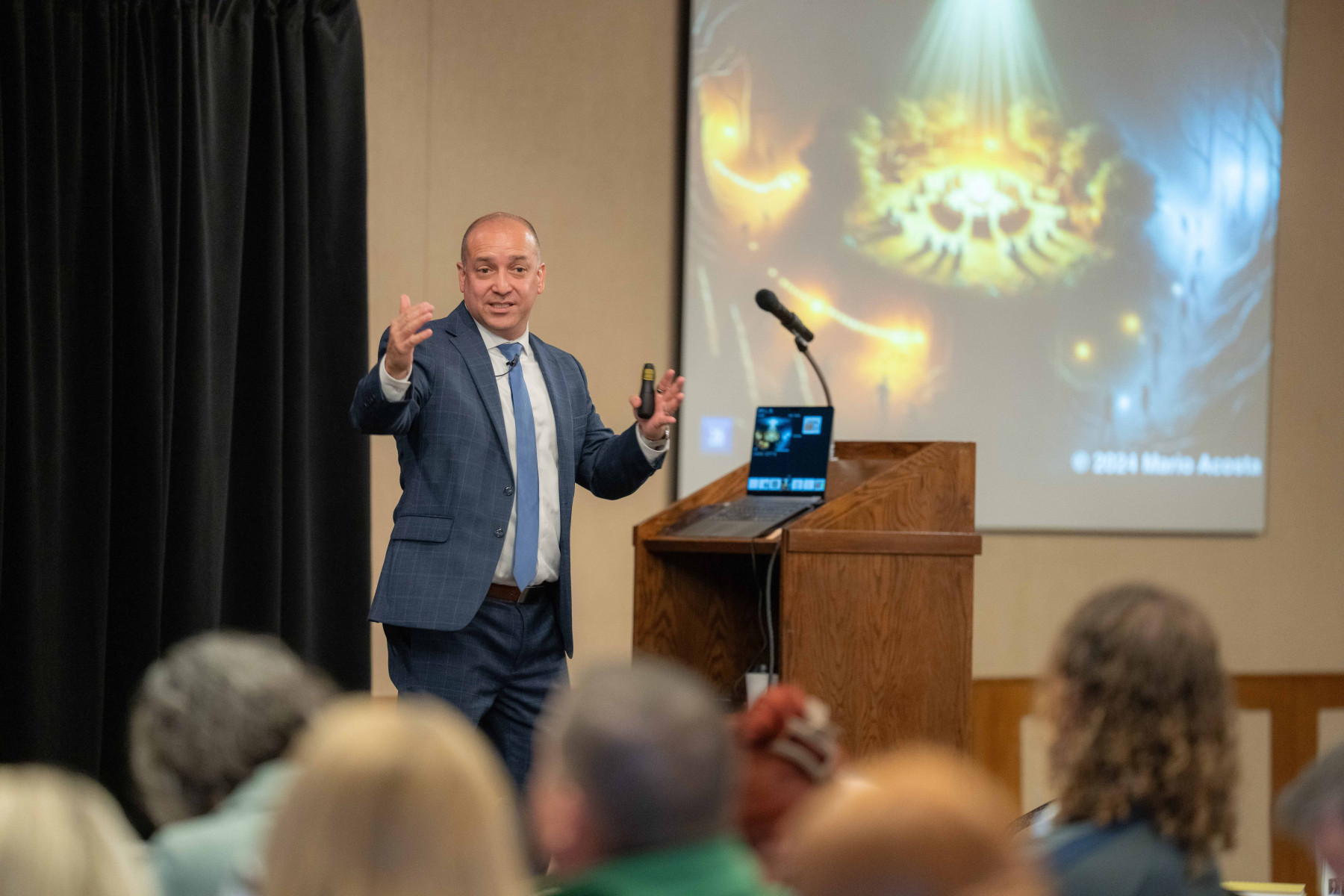
As the new school year approaches, educators are doing everything they can to prepare.
That same commitment brought nearly 300 educators from across central Minnesota to last week’s 2024 Sourcewell Educator Summit, where they engaged with fellow educators and education leaders on diverse topics including student support, dysregulation, career readiness, AI, achievement, racial identity, educator self-care, and more. At the top of the list? Helping both students and teachers cultivate a sense of stability in the classroom.
“When we go through a crisis, we lower our needs and priorities to the bare minimum — whatever we need to do to get by,” says Dr. Mario Acosta, educational coach and one of two keynote speakers at the Summit. “And we’ve seen that in schools across the world from 2020 onward. Personal connections were fractured between students, teachers, and parents…and those connections are only just now starting to heal.”
But personal connections are at the core of academics, and without them, students can wind up adrift in an impersonal system. Dr. Acosta talks about this further in a recent episode of Sourcewell’s Ed Soul podcast:
“In a post-pandemic environment, kids are struggling to know how to be motivated in school. They’ll say ‘I have things the teacher gives me to do, but I don’t always want to do them; I don’t understand why I should.’ And if you’re the kind of kid who just knows they have to jump through these hoops to be successful, then you’ll do it. But more kids — most kids nowadays, even — are not going to do it blindly just because they’re ‘supposed’ to. We have to give them a better reason.”
“In my last school, our lead custodian was one of the most important people in the building. He related to all the kids. Everyone knew his name – they called him Mister Eddie. All the kids knew him. He was cheerful, he fist-bumped every kid every day. The kids kept our building clean for Mister Eddie.”
For Dr. Acosta, that goal is at the core of his work with Marzano Resources and the High Reliability Schools Network: giving educators permission to slow down and forge personal connections with their students. By making space for students as individuals, educators can give them concrete reasons for learning even in the midst of impersonal, standardized systems.
Of course, Dr. Acosta acknowledges, educators are already trying to do that. The question isn’t whether teachers and staff want to connect with students and make them feel welcomed, supported, and safe. The question is whether they’re given time and resources to do so. If requirements force the class to keep moving, it becomes harder to connect with students who miss a step. There becomes only one correct way to learn.
“We are busy chasing content, because that’s the requirement, that’s what’s mandated,” says Dr. Acosta. “But if we’re given a little bit of time to make sure we connect with the kids, the kids learn that we see them as people. Not just ‘here’s this content, take this quiz, pass this test,’ that kind of thing.”
“Our educators have a thousand things to do, from class planning to team planning to test passing. We need to empower teachers to put the classroom dynamic at the top of the checklist. Then we can focus on providing a high-level education. If we get those relationships right, we can do a lot more for every student.”
--
Dr. Mario Acosta is an author, national presenter, and award-winning educator with more than 20 years of experience. To learn more about his work, resources, and upcoming events, visit his Marzano Resources profile.